
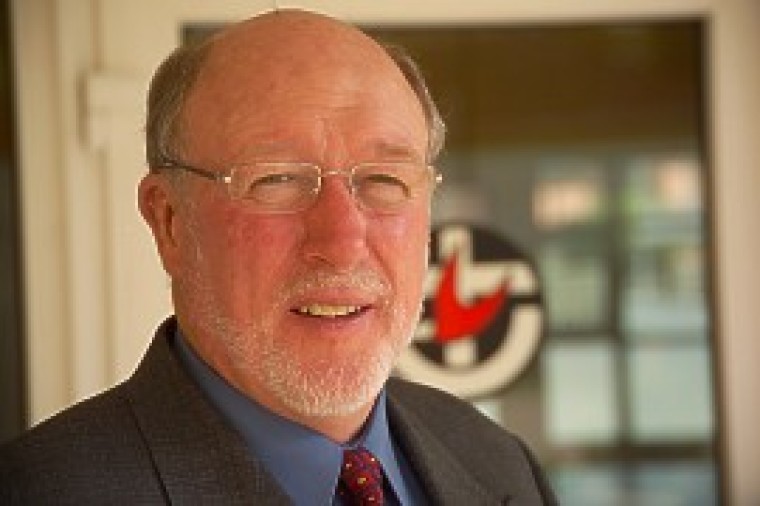
In an exclusive interview, Christian Today Australia catches up with Jim Mein to talk about the 30th anniversary of the founding of the Uniting Church of Australia.
1. Describe your experience of when the Uniting Church gave its first service in 1977 in the Sydney Town Hall.
For me it was an indelible experience for it was the birth of Australia's first home-grown church. It mirrored my family's beginning in this land at Ebenezer in 1802: a combining of many Christian denominations to form an ecumenical congregation wherein my ancestor was the leader and only Presbyterian. For over 170 years it was recognised as Presbyterian until the Uniting Church in Australia came into being. We continue to be strong in building and strengthening the community through our ecumenical, interfaith and community services activities.
I sat in the Town Hall with my wife Gill and the Rev. Dr Colin Ford and his then wife, Margaret as the representatives of St Andrew's Turramurra South Congregation, my parents who were the lay representatives of St John's Wahroonga and the Rev. Peter Nganingu from the Ernabella Community. Our family had strong ties with that Aboriginal community and those of the nearby Pitjinjara communities. Peter's presence was essential if we were to be a home-grown Australian church, and one to later formally covenant to walk together for reconciliation with our indigenous peoples. Also important was to see a woman as a significant leader in Mrs Lillian Wells (now deceased), our Synod's first Moderator.
2. The Uniting Church has gone through ups and down over 30 years, I was wondering what has been the most difficult time in your opinion for the Church to deal with?
There have been two significant issues from my experience.
Firstly the enmity that built up over property divisions and decisions.
It still exists in some quarters of the Presbyterian Church (some Presbyterian congregations decided not to join the Uniting Church in Australia) and the newly-installed New South Wales Moderator, David Seaman, last night urged his annual Assembly to move on for it is unhelpful to continue dwelling on this. If only there had been a whole of church vote for all uniting denominations, rather than individual Presbyterian and Congregational Church congregations voting whether to unite or not!
The other challenge is the issue of sexuality in leadership. This is still not a resolved issue in certain pockets of our membership. This struggle has had some positives, particularly as a catalyst in the search for a greater understanding of the Jesus model (the gospel) in today's context, the status and understanding of the Scriptures, and the importance of understanding that our unity is in Jesus Christ, not doctrine, and that we must learn about our diversity which is a gift from God.
Diversity is a challenge for the Uniting Church in Australia and for the Australian community. We have a long way to go as church, and as community, to recognise difference, to see diversity's enriching value to community, to respect people's rights to be respected for our differing views and especially in a safe, peaceful, and respectful place or environment.
3. I am sure that there are also peak times for the Church, I was wondering in your opinion what do you consider a joyful moment for the Church?
There have been oodles of joyful occasions: Installing moderators, inducting and ordaining ministers and commissioning lay leaders, opening new community cervices programs and facilities, achievements of schools, leaders and the like, the opening of the Medically Supervised Injection Centre, opening of new congregations and faith communities, the Covenant with Congress in 1994, the impact of our social advocacy, the launch of the Synod's property resources unit, the creation of ELM (lay ministry education centre), our ecumenical and interfaith partnerships. Life is not about negatives! It is about opportunities and experiences.
4. The 2006 Census has just come out, showing a decline in mainstream religious affiliation. I was wondering whether there are any projects or initiatives which the Uniting Church is doing to slow down or reverse this decline.
The Uniting Church in Australia, especially in the New South Wales Synod has been working on bringing us out of the modern and post-modern eras into the church movement era. As the New South Wales Synod's first full-time Moderator, I have played a significant role in developing a Synod-wide vision and have been articulating and promoting it across our membership through visits, articles and every other opportunity I have had.
This vision is steadily being picked up by quite a number of congregations in their own contexts. We have many growth congregations. However, there are others who will die â€" and that can often be good for it allows change to happen and for resources to be released to facilitate such change. This cannot happen while we maintain buildings for dying congregations.
The trend is reversing but how long it will take depends on the older generations allowing the newer ones more scope, responsibility and involvement in decision-making and overall leadership.
5. What hopes or goals do you have for the Uniting Church for the future?
I have very positive views of and goals for the future. But it will take both time to achieve and an intentional commitment to change for the signs to be generally seen by the community. Look at our Synod's vision statement at http://nsw.uca.org.au/secretariat/documents/moderatorsvision.pdf. Add to that the vision of the Uniting Church in Australia for being a significant community builder across the nation and beyond and you will see why I feel positive about the church's future.