
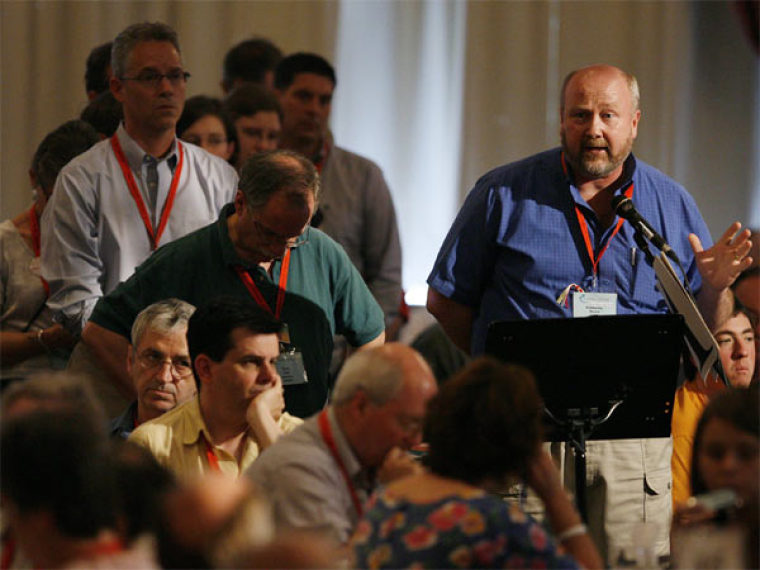
Bishop Michael Ingham from the Vancouver-based diocese of New Westminster, which authorised the rite for same-sex blessings in 2002, felt a sense of betrayal after a 'majority' voted in favour of the motion.
He told the Anglican Journal that, "No one can take comfort from this vote because the majority voted in favour of local option. For many, there would be a sense of betrayal."
Another bishop expressed her disappointment warning that regardless of the decision being made today to reject the motion, some dioceses might simply choose to bless same-sex union anyway, reported the Anglican Journal.
Even before going through with rejecting this motion, the General Synod was itself deeply split between the two wings of the Church.
The gravity of the issue of homosexuality and its effect on the Church has been seen by conservatives as a life and death issue, where no compromise can be made.
In 2006, Sydney Anglican Archbishop Dr. Peter Jensen made this plain in his speech delivered in New Zealand, saying the Bible treats the issue of homosexuality as a life and death issue and made it crystal clear in both the Old and New Testament.
Dr. Jensen said: "…Furthermore, the biblical teaching makes this a matter of spiritual life and death. So much is clear from the Old Testament, but so too is it crystal clear from the New Testament: 'Fornicators, idolaters, adulterers, male prostitutes, sodomites, thieves, the greedy, drunkards, revilers, robbers, - none of these will inherit the kingdom of heaven' (1 Cor 6:10, NRSV)."
Dr. Jensen went further, saying that this 'life-style' choice is perilous and encouraging it or allowing it is endangering the lives of those involved and is inconsistent with the duties of being a minister of God's word.
For a motion to pass, it requires a 'yes' vote in the three orders. The three orders within the Church are: the Lay delegates, the clergy and the House of Bishops.
The first two orders, the Lay delegates and the clergy, voted to support the motion with a margin of around 9 votes. However, the House of Bishops voted, with a thin margin of 2 votes, against it.
The Lay delegates voted 78 to 59 in favour of the motion and the clergy voted 63 to 53 in support of the motion. In the House of Bishops, they voted 21 to 19 against the proposal.