
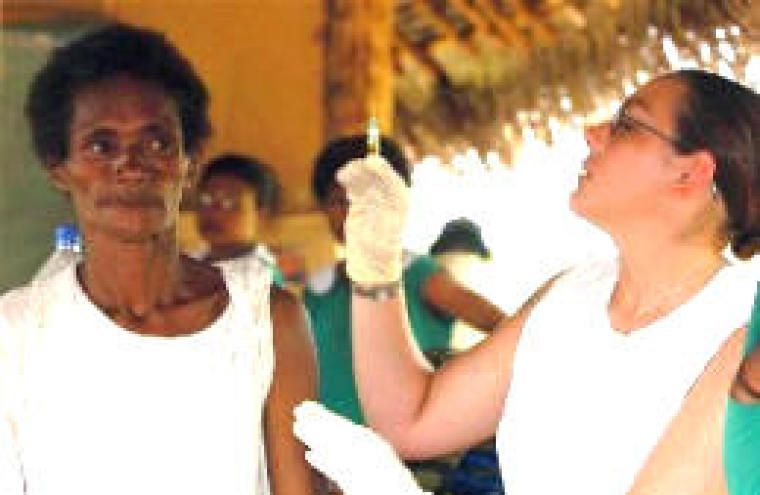
Endemic diseases like malaria are getting worse rather than better, with tuberculosis still killing 2,700 people in Papua New Guinea in one year alone. Now HIV and AIDS, already of epidemic proportions in Papua New Guinea, are threatening to spread through the rest of the Pacific "like a dangerously powerful storm that has come from offshore."
Although rates of known HIV infection in most countries of the Pacific are, at this stage, quite low, the epidemic has been likened to a "silent catastrophe". In Papua New Guinea there could be at least 120,000 people carrying the virus (out of a population of 5.9 million) and the World Health Organisation estimates 20 per cent of the population will be infected in the next decade unless urgent action is taken, making the prevalence rate the highest in the world outside Africa.
For small nations like Tuvalu and Kiribati, AIDs is a potential time bomb because most of their young men who work on overseas ships are visiting places where HIV is prevalent. They return home where there are no adequate testing facilities for HIV, or drugs for other diseases they might have picked up while away.
Non-communicable diseases, such as dia betes, cancer, cardio-vascular disease and obesity will soon pose as much problem as communicable ones (malaria, TB and HIV).
These will place huge pressure on a fragile health system. Without adequate funding for the treatment of these diseases, the situation will escalate.
"The rapid growth of HIV is fuelled by demographic and cultural factors, including ignorance and denial, poor health facilities, no medicines or counselling, traditional taboos that prevent discussion of sexual matters and a great deal of fear and stigma attached to the disease", said Professor Trevor Cullen from Perth University who has done research in the region.
A consultation in Nadi, Fiji, organised by Pacific member churches of the World Council of Churches brought together 36 church people to work out a Pacific response to HIV and AIDS.
One of the participants, the Reverend Strickland Pua, said Pacific churches and leaders have a long way to go before true dialogue on HIV infection can take place.
"Conservatism, and a strict cultural observance aligned to fundamentalist Christian values weave through the fabric of everyday Pacific life. We are still in denial mode. Like an ostrich with its head in the sand we hope it will go away.
"Amongst many Pacific churches there is a dominant right-wing theology of discrimination and oppression against gays, lesbians, HIV and AIDS. Gender discrimination and sexual violence have yet to be addressed."
At the end of their consultation, the participants put together a statement, the Nadi Declaration.
The declaration promoted the urgent establishment of a network of resource people around the Pacific; information and education through churches, schools, media and other gatherings; a call for church budgets to accommodate social and development issues; congregations actively engaging with HIV positive people.
By John McNeil of Challenge Weekly, New Zealand
Special to ASSIST News Service